Northern California Angora Guild

Thursday, September 07, 2006

Night Blooming Cereus
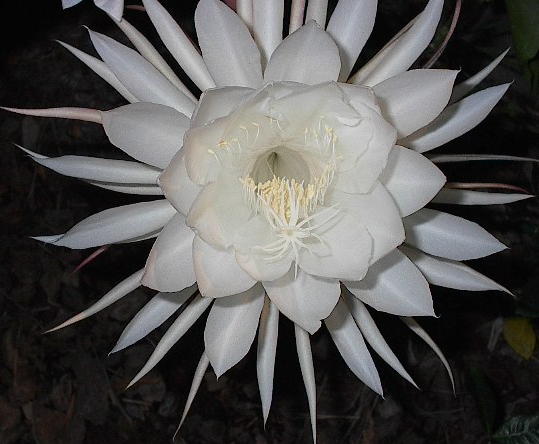

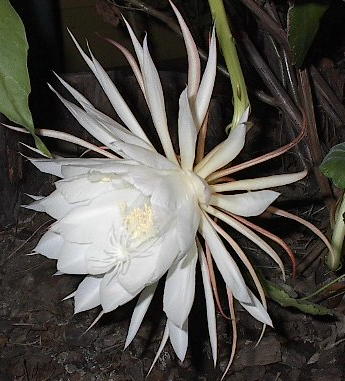
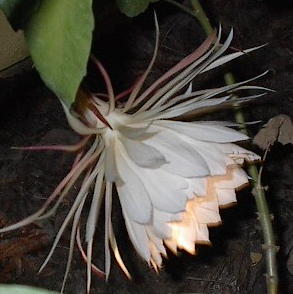
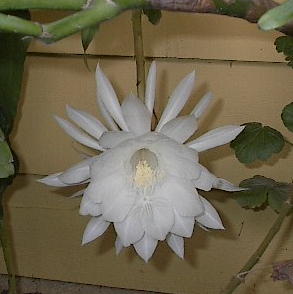

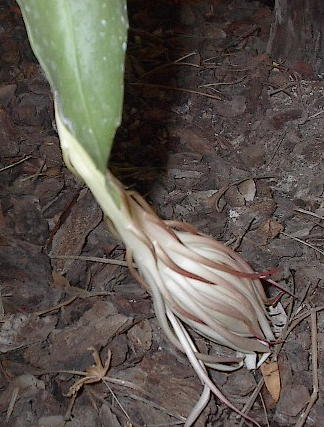


There were excitement at Betty's home. The Night Blooming Cereus bloomed last night!

Night Blooming Cereus, as the name suggests, blooms at night. The flowers have a blooming life of about 12 hours. It smells and looks wonderful when the flowers are in full bloom, but sadly the beauty only last a very short time.

The first four photos are the early stage of the blooming in various views. The fifth photo is taken 10 hours after the blooming started.

The sixth photo shows the bulbs that yet to bloom; and the last photo shows the flower wilted.

Chinese use the phrase "One flash of Night Blooming Cereus" to describe a beauty or a glory that lasts a very short time.

For more about this plant, visit:

http://rfovell.bol.ucla.edu/cereus.html

Wednesday, September 06, 2006

Happy Fall Season


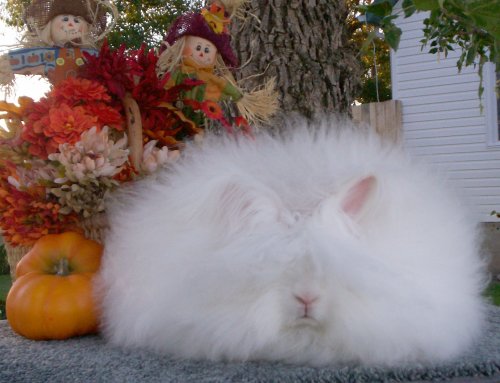
Holly from Canada wishes NCAG members a happy fall. She sends in these beautiful fall theme photos of her two young white English Angora seniors. They are the offspring of Chu's Terena, who also took some fall theme photos before she left for Canada.

Fall is a happy time for serious rabbit breeders. Fall shows start around this time, we have the chance to go back to the shows to show off our rabbits, see our friends, and enjoy each others company.

Fall is a happy season indeed.

Monday, September 04, 2006

Emilia and Ashka on Japanese TV


Betty was contacted by a Japanese TV producer of "Amazing Animals" for information and photos of English Angora. The producer already had picked Emilia and Ashka as her choices at the time of contact. No, Betty and the rabbits were not invited to go to Japan, the request was for the photos.

The segment was broadcasted in Japan at the end of July. Yumiko taped the program and sent it to Betty. Yumiko was a good friend and associate of Chie. Yumiko has been continuing the correspondence with Betty since Chie's passing last year. Betty and Yumiko will be meeting for the first time in the upcoming convention in Fort Worth.

The English Angora segment starts with the photos of Emilia and Ashka. In the first picture, the logo of "Amazing Animals" is seen at the right corner. The second photo shows Ashka with five words that can be translated into "Unknown Animal!?"

Then the program follows a doe going through a pregnancy, giving birth and then the bunnies appear in the program in flesh. More will be reported in the future posts.

Just in case our readers wonder whether Betty received any compensation. Yes, there was a small payment for the use of the two photos.

Sunday, September 03, 2006

English Angora Going Through A Tube


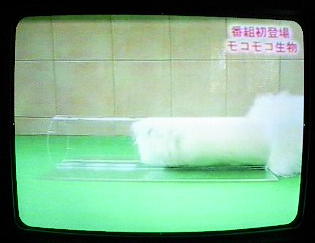
In July, a Japanese TV program "Amazing Animals" did an experiment of putting an white English Angora through a glass tube.

In the first picture, it shows that the glass tube measures 60 cm (23.6 inches) long. The words in the upper left corner says "Experiment". (The direct translation of the two words is "practical examination").

In the second picture, it shows that the glass tube measure 15 cm (5.9 inches) in diameter. The same words "Experiment" appears on the upper left corner.

The third picture shows the white English Angora in waiting.

In the fourth, fifth, sixth and seventh pictures, the English Angora is going through the tube.

The last picture shows the English Angora sitting in the tube from the front view.

At the end, the rabbit came out in his original shape, totally unharmed.

Saturday, September 02, 2006

Remember When: How to Start the Wrong Way


Betty has encountered the question of "How did you start in English Angora?" many many times in the last 20+ years. Here is the beginning of the story. In July 1982, Betty wrote down the name of an exhibitor who advertised English Angora bunnies for sale in the Santa Clara County Fair and called her. In August, Betty received a call back and said there's a litter of English Angora bunnies ready to go, so Betty drove to the Santa Cruz mountains to look at them. It was a narrow winding road, a very difficult drive. Betty arrived in a small cabin with a barn next to it. The residence had no water, no electricity, no ... Betty did not even know that there were places like that in the modern time. Anyway, there were litters of little bunnies, 4 weeks old ones, at a very low price. Though it's not a good idea to buy 4-week-old bunnies, the price was right and the drive was hard. Betty bought an English Angora bunny and a French Lop bunny of the same age to keep each other company. The breeder told Betty that the rooster that just came back from the Santa Clara Fair would be chicken soup the next day, so Betty bought the rooster as well. Here are two pictures taken in 1982. In the top picture, Betty was seen with the 4 week old bunny, Angelina. At 2 months old one of Angelina's ears dropped. One up ear and one down ear. Betty took Angelina to the show for the first time in the fall, the down ear went back up and stayed up for the rest of her life. At five months old, Angelina won a BOB in a very small show and got her first leg. Betty was really excited. The second picture was taken when Angelina was at her prime at 5 months old. Two weeks later, Angelina gave birth to seven dark bunnies, a total surprise. Angelina was the only English Angora that Betty owned then. Well, it was a chestnut agouti French Lop junior buck that did the job. The mixed breed bunnies were some of the ugliest thing one would've ever seen. Their ears were going every direction, all chestnut agouti, all with very pointed faces. Luckily Betty found pet homes for all of them. Then Angelina was taken back to shows and was able to get two more legs and became a Grand Champion. The GC really does not mean much if the genes are not good. Betty bought a white English Angora buck out of the same line from another breeder. The bunnies from the pair were pretty when they were young, but all became big, long and narrow with long ears when they grew up; some had floppy ear problems. Finally Betty realized that this was not a line to be extended. She stopped breeding Angelina and Angelina lived out her natural life and passed on at about 6 years old. Nothing from Angelina stayed in Betty's breeding program. Betty started with a different line. Story to continue. What happened to the French Lop bunny and the rooster that came with Angelina? The French Lop doe was later sold to another French Lop breeder as Betty had switched from French Lop to English Angora. Betty bought several hens for the rooster as his wives. He had a good life for over 9 years until a raccoon got into the chicken coop and destroyed his entire family.

Friday, September 01, 2006

Elsia and Her One Bunny


Cathy and Kim report an amazing news.

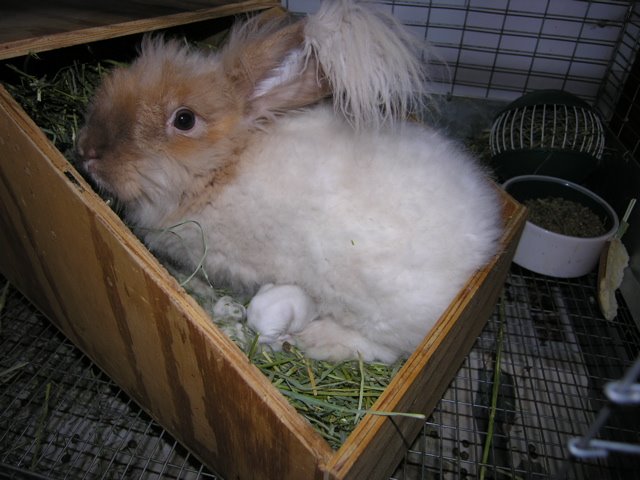
Elsia was bred but no sign of being pregnant. After one week of her due date, Cathy and Kim took out her nestbox. Kim got up around 3 am and found Elsia having two bunnies on the wire, one black and one white. The white one was revived and now over one week old.

Cathy said, "We are just taking it one day at a time. The ears and eyes are almost open and the bunny is very responsive. He/she has a stuffed moose to snuggle against and we caught Elsia snuggling up to the baby. We are keeping the baby in the nest box away from Elsia. She is a good mom and doing her best."

It is amazing that a live birth resulted from such an overdue pregnancy